Showrunners
Gameplay Systems and Mission Design
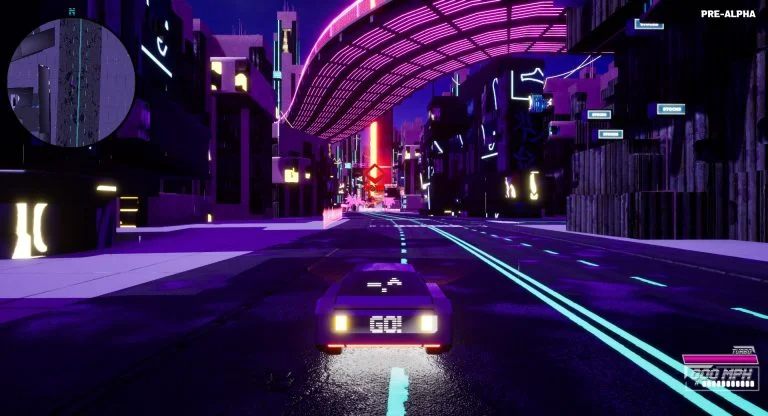
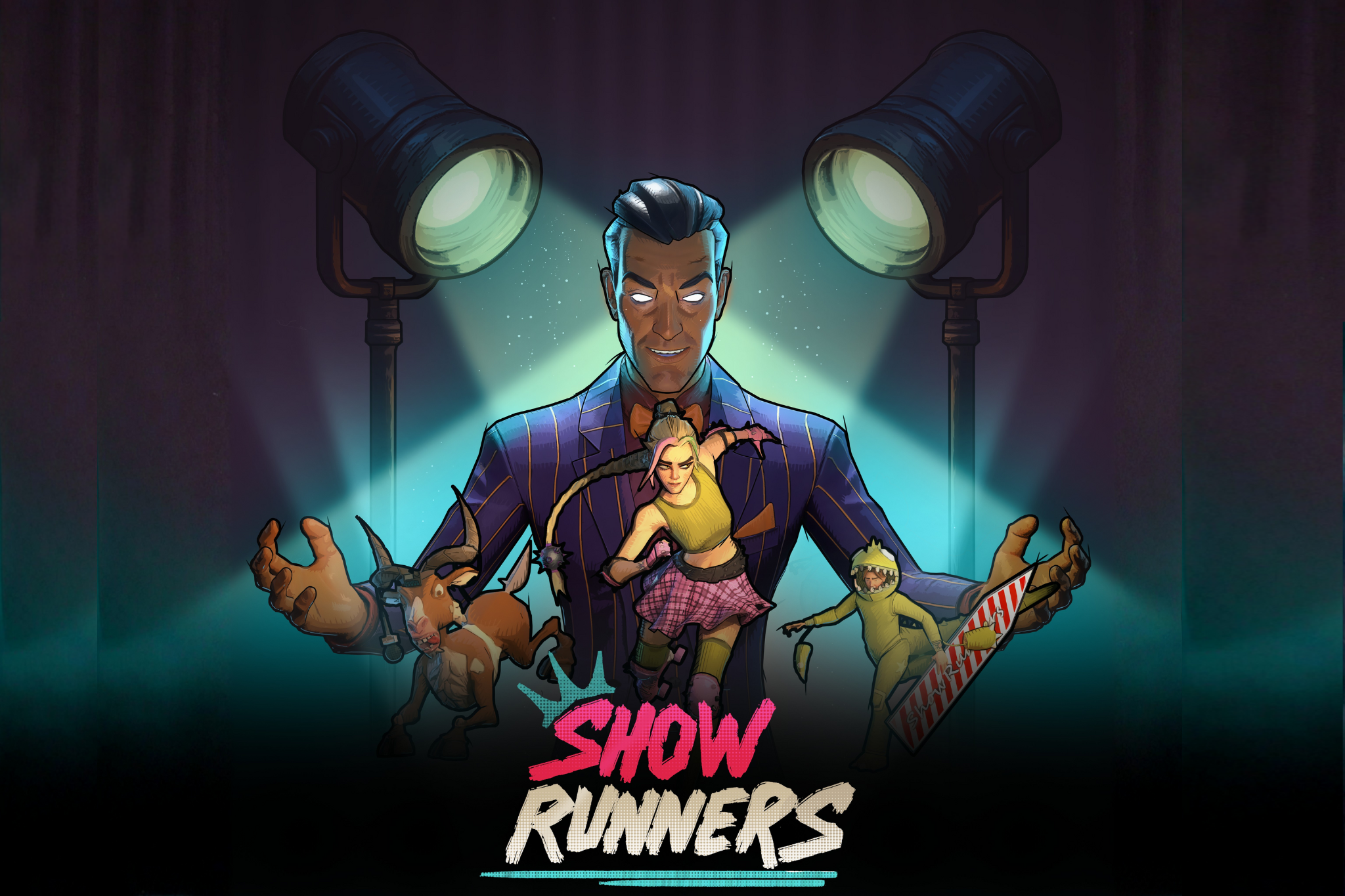
Showrunners is a single-player 3D skating Unity title, focused on slick controls, pulling off satisfying tricks, and mastering speed with expressive movement. I designed core gameplay interactions and mission structures, working closely with Artists and Programmers to create systems that allowed both satisfying player expression and environmental storytelling.
Role: Game Designer
Studio: Mothlight Studio
Engine: Unity (6000.0.79f1)
Project: Fast-paced 3D skating speed-running platformer
Team: Small multidisciplinary team (8 people)
Key Ownership: Tutorialization, mission flow, system design, UI scoring, combat balancing, pickups, playtest iteration.
As as game designer, I was responsible for designing several of the prototype’s central gameplay interactions and structuring missions around its skating mechanics:
My Contribution:
- Designed gameplay interactions for tricks, scoring, combat and pickups.
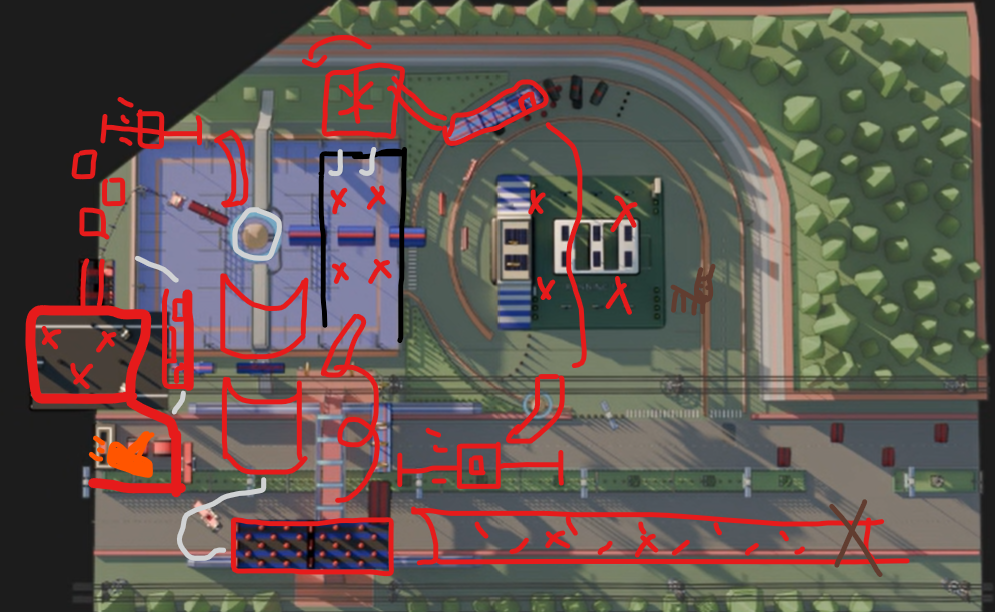
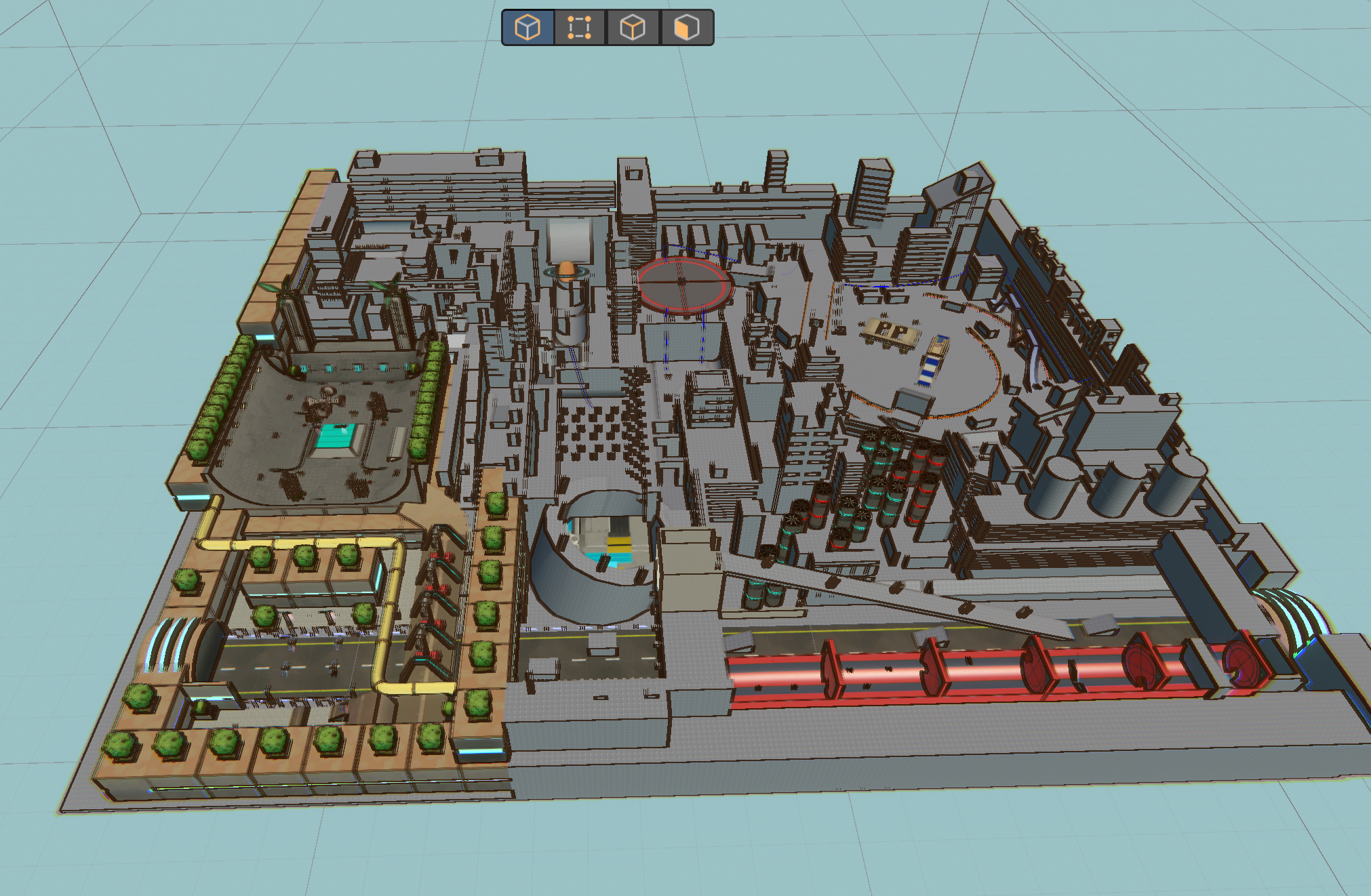
- Created mission-flow diagrams and level blockouts to establish pacing and encounter structure.
- Tuned combat values for engaging enemy AI.
- Planned and conducted internal and external playtests.
- Converted playtest data into actionable design changes.
- Collaborated with Level Designers and Artists to integrate gameplay, narrative and worldbuilding.
Constraints: We needed to deliver a 'vertical slice' for both the Trasfuzer submission and the DunDev program in mid 2025, meaning that we had around 8 weeks to establish a working prototype that showcased our design goals.
With a small team of 8 people and limited time, our designs needed to be reusable across several levels and clear enough to communicate clearly between each of the disciplines.

Design Goals:
- Expressive movement: Make skating enjoyable and meaningful outside just scripted mission objectives.
- Readable scoring system: Give players intuitive and understandable feedback about successful tricks and combo's.
- Integrated mechanics: Ensure combat, pickups and power-ups complement movement rather than interrupting it.
- Accessible onboarding: Introduce mechanics gradually via tutorializaition to prevent overwhelming new players.
Feature Case Study: Tricks and Scoring System
Design Problem: The need to create a system that gives the player an expressive way to move through the environment and to provide gameplay beyond just reaching the finish line.
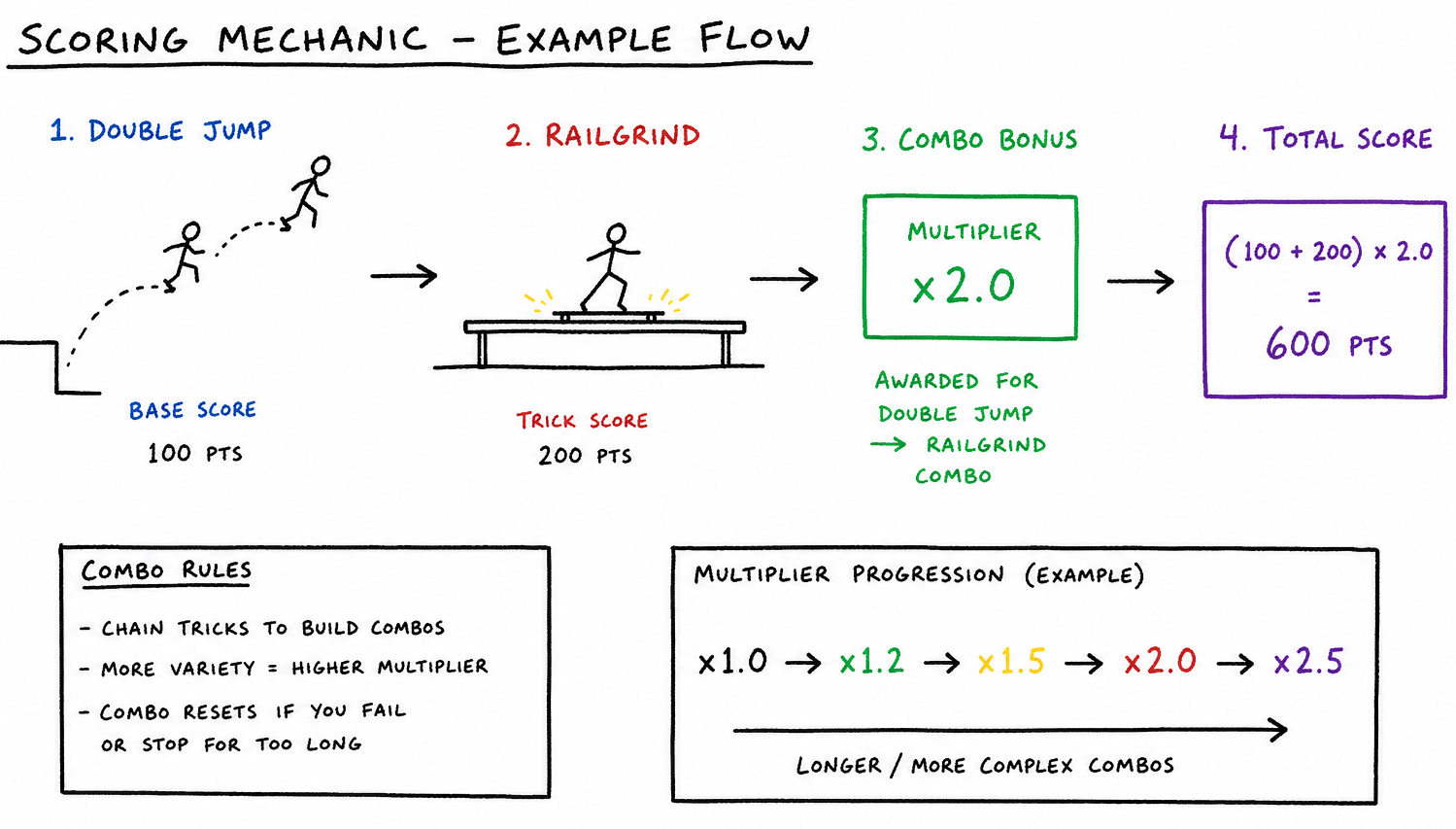
Intended Player Experience: Players can perform satisfying stunts and string together different moves, gaining higher scores based on move combinations.
My Design: I designed a scoring system that incorporated moves such as rail-grinds, wall-running and double-jumps: Players gain set points for individual moves, but can gain score multipliers by combining a variety of moves.
The intention here was to encourage players to perform several different tricks, rather than spamming the same ones, getting them to make the most of the varied environmental features.
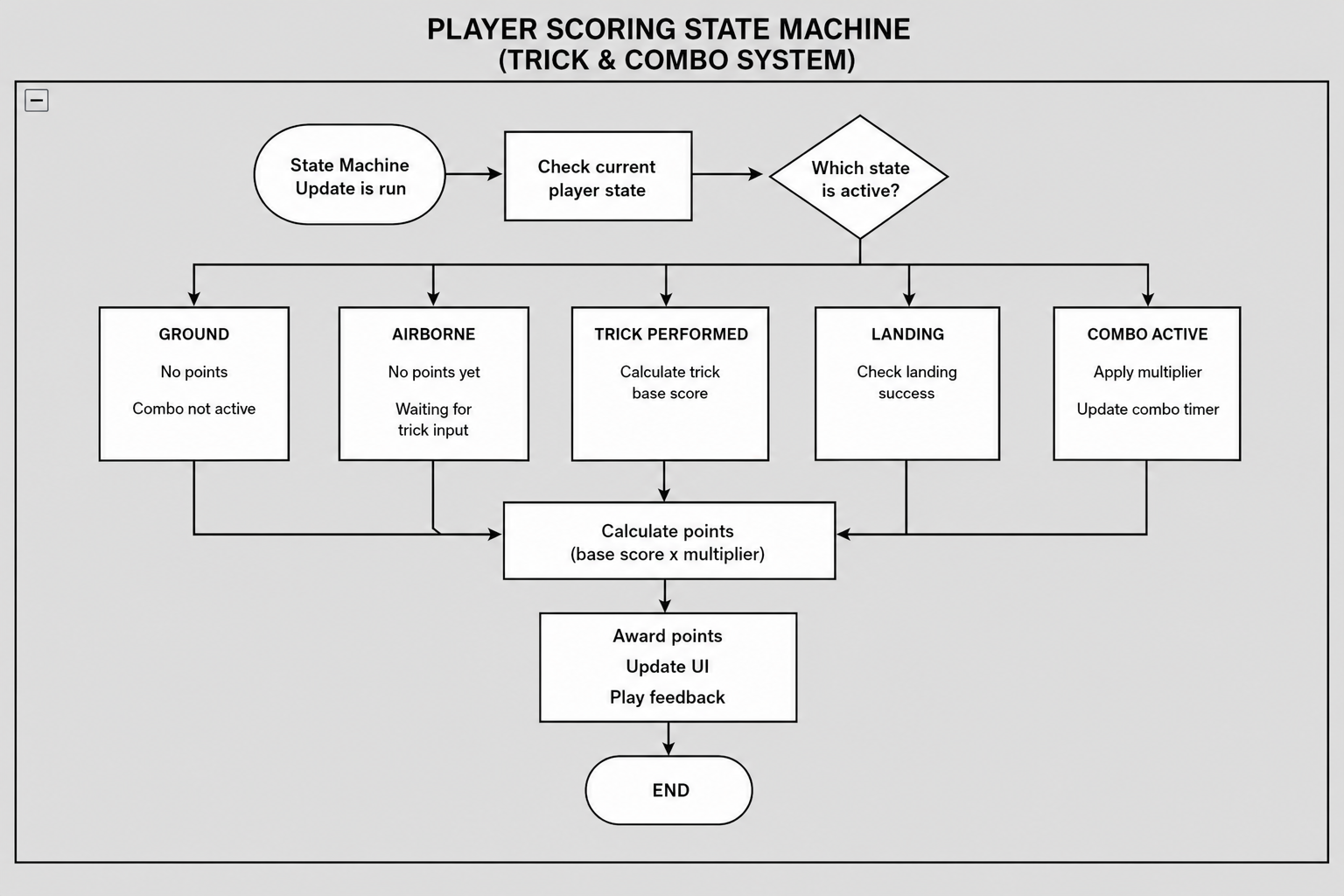
Implementation and collaboration: I collaborated with our programmers to create a state machine which checked which action state the player was in and how many points were generated from each trick state. Logic was also added to check for state combinations, adding to a multiplier applied to the base score.
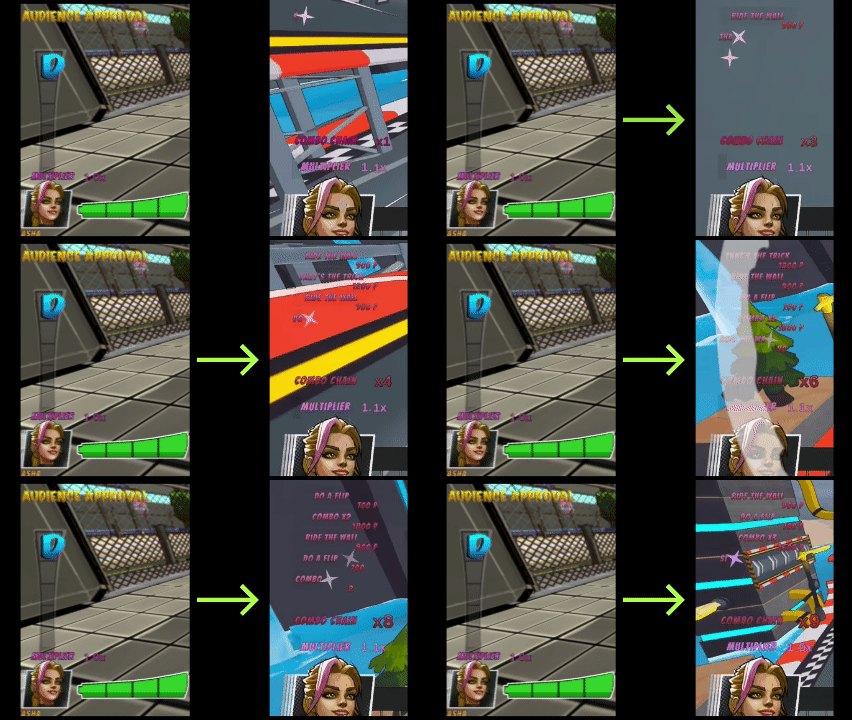
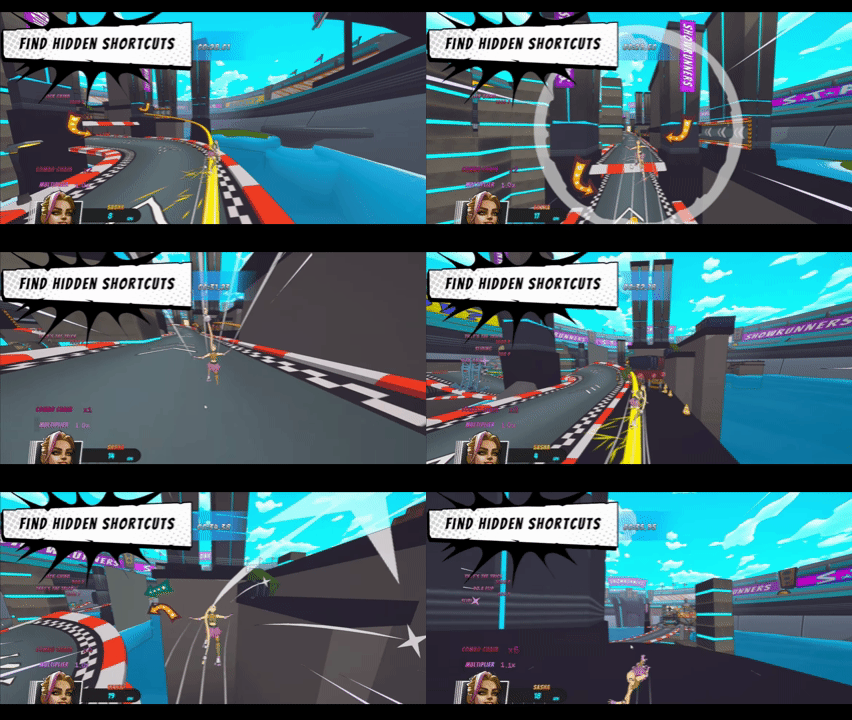
Playtesting and iteration: The initial design included a combo meter, meant to represent Sasha's 'approval' level from the TV audience. However playtesting data showed that the meter wasn't satisfying enough, so the UI was iterated to show your tricks dynamically appear on the side of the screen.
Outcome and learning: We ended up with a multi-layered scoring system that made the most of existing code infrastructure and added depth to gameplay by encouraging players to use a variety of tricks. I learned that any designed system needs to give the player clear and engaging feedback.
Feature Case Study: Mission flow, tutorialisation and level blockouts
Design Problem: The need to design mission flows and environments that allow for simulation-heavy movement.
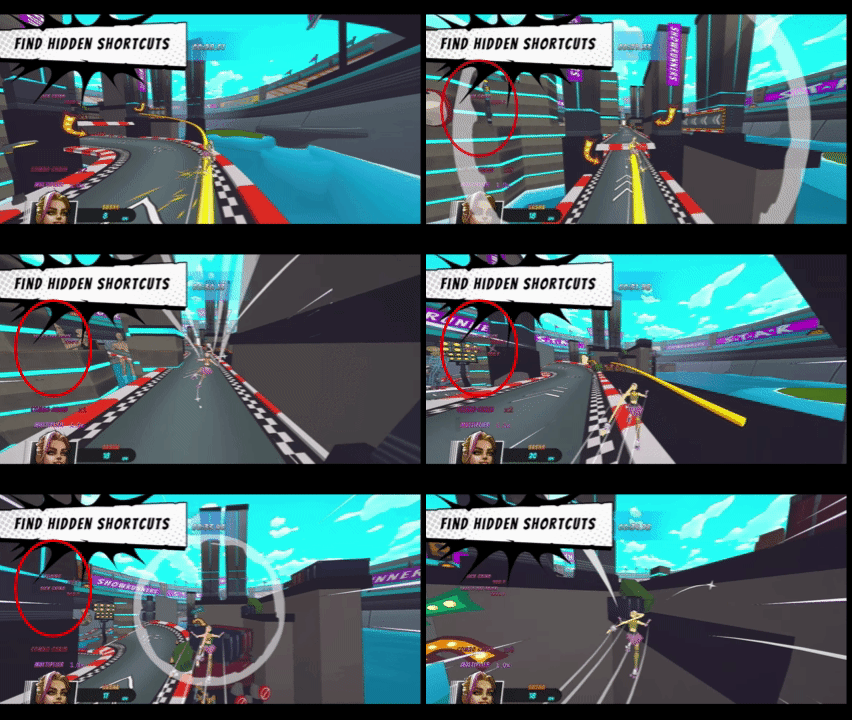
Intended Player Experience: Players can use movement system to follow natural flow of course whilst maintaining speed and momentum using environmental signposting.
My Design: I co-designed a movement system and corresponding obstacles that created satisfying traversal challenges whilst also allowing players to prioritise speed and performing tricks.
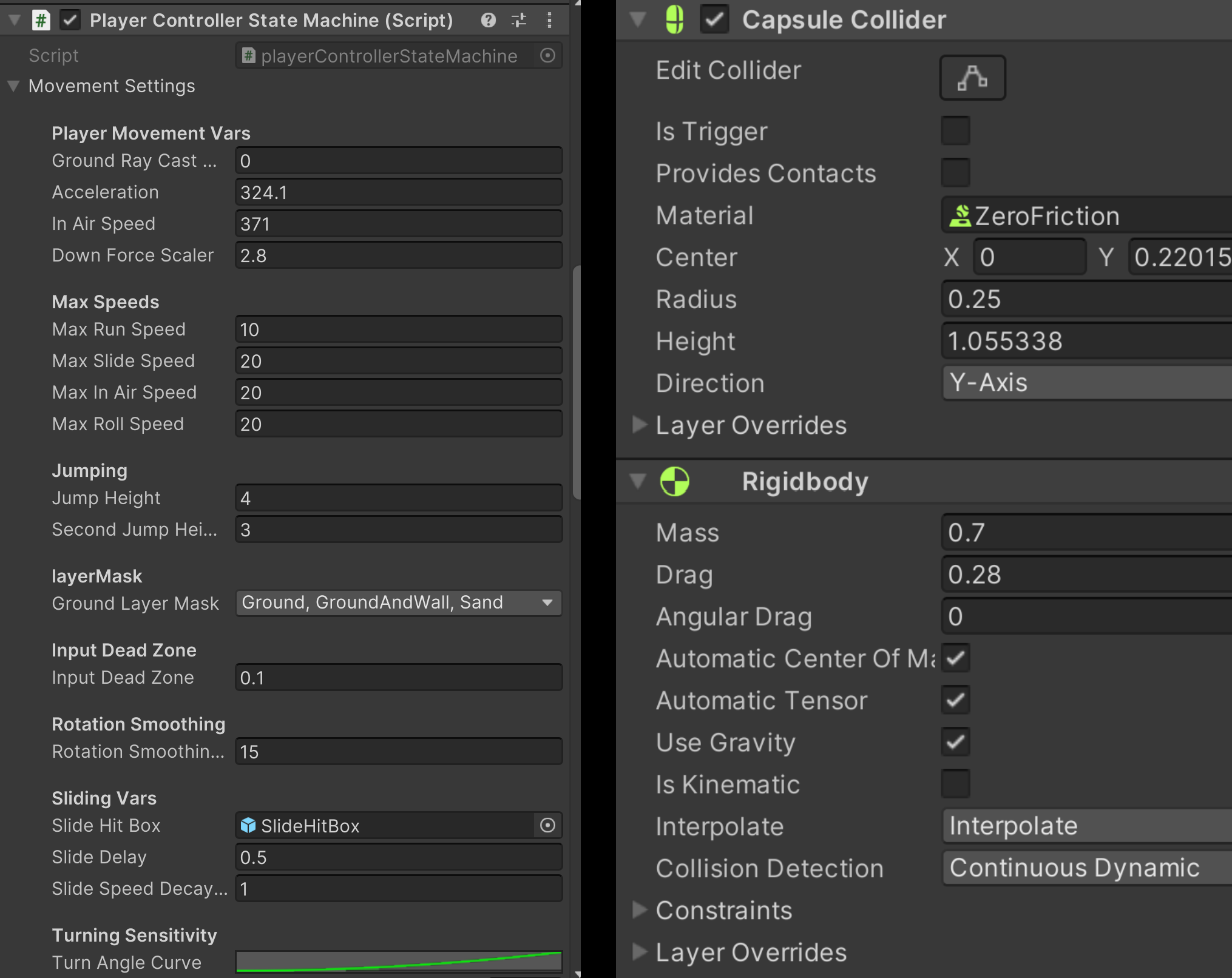
Implementation and collaboration: I worked closely with our programmers to create a values-editable player controller script, and fine-tuned the physics materials and rigid body values to allow for varied and dynamic movement.
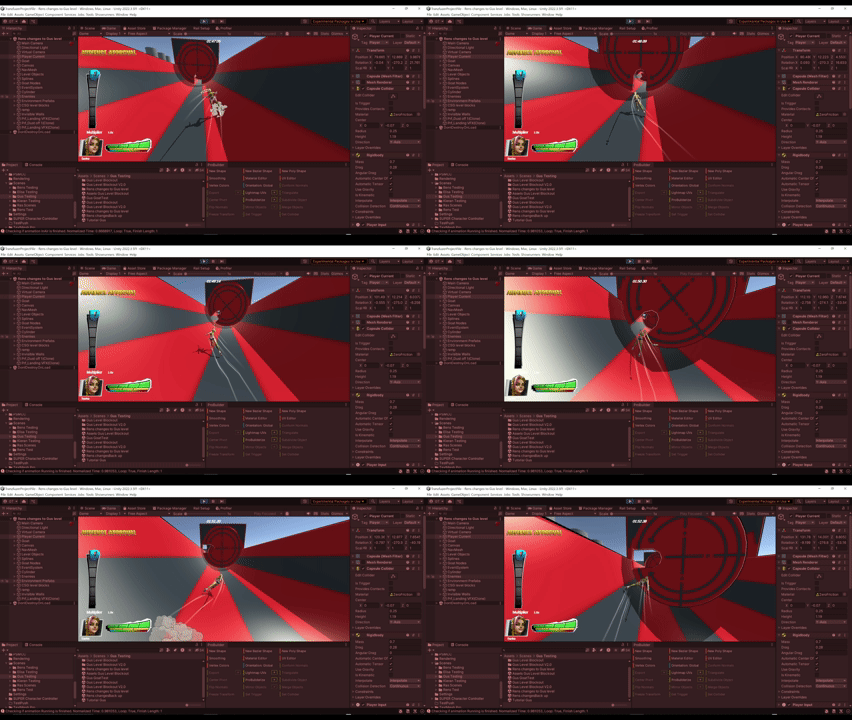
Playtesting and iteration: Collecting data from multiple internal and external playtests revealed that players were initially struggling to control the character at top speeds due to conservation of momentum. To resolve this, we de-coupled the turning radius values from the player speed calculation and clamped them at a constant rate. This enabled maximum responsiveness even at high speeds.
Outcome and learning: By creating reusable modular track pieces (with the help of the Realtime CSG plugin) we were able to make multiple levels in a short amount of time. I learnt that simulation/realistic movement controllers require environments sculpted around them to allow for smooth and satisfying traversal.
In total, the project secured over £7,500 of capital funding, including from Transfuzer 2025.
The project was also selected as part of the DunDev 2025 programme and and chosen to undergo an extensive 5 week development cycle in early 2026.
Visit the Steam page to try it out for yourself!